Whole plant
Whole plant — every trade, one AI, zero import. All 20 causal chains. Part of the glass family — like our glass BESS, biogas plant and CHP.
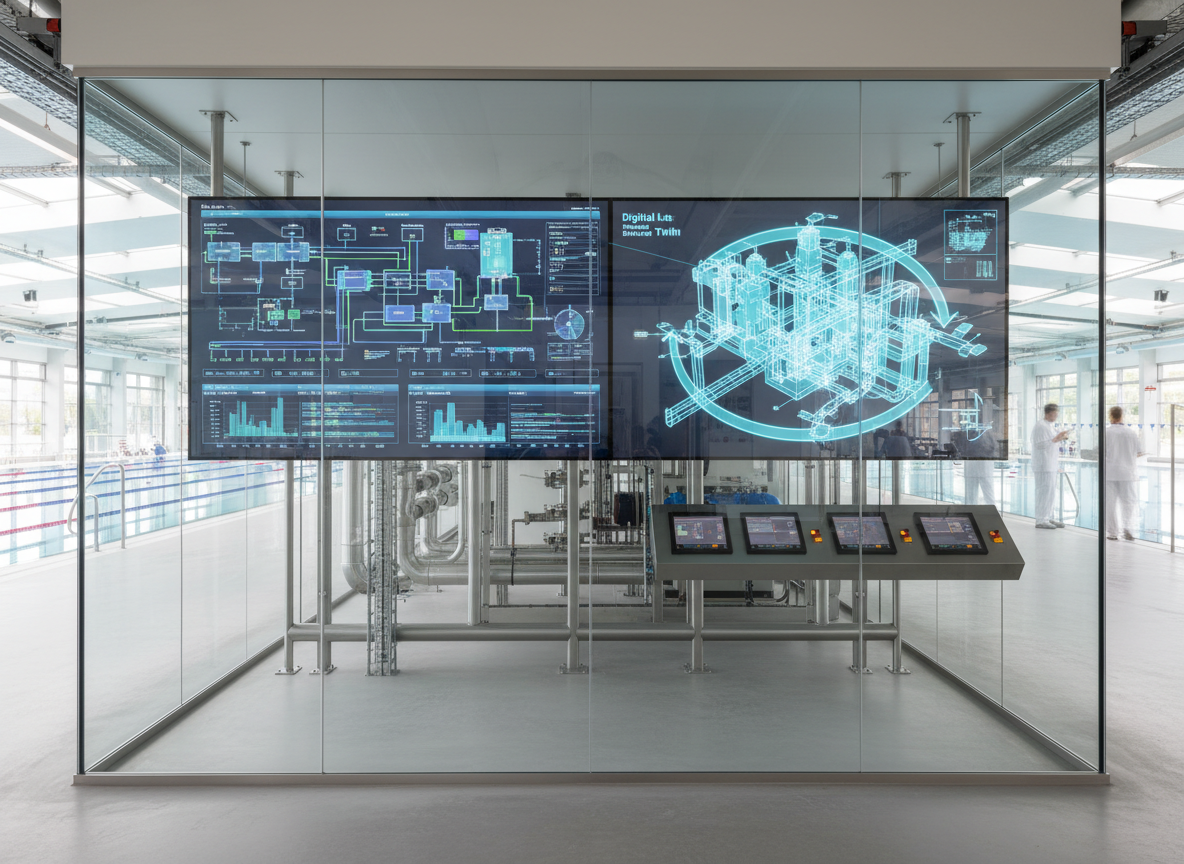
PV · HP · HVAC → AI control → Aquatic center
Whole plant — every trade, one AI, zero import. All 20 causal chains. Part of the glass family — like our glass BESS, biogas plant and CHP.
The AI control centre unifies every subsystem into one glass-box plant: it reads each meter register-true (Modbus/SunSpec/BACnet), drives setpoints and runs zero grid import.
Through the causal chains (K01–K20) it explains every anomaly — cause, consequence, measured via, standard, remedy — instead of just raising alarms. This is the core of the Glass Pool.
Every trade under one AI: as-is (existing docs) to plan (high-end):
Overview: The Glass Pool → · Markets: pool markets →
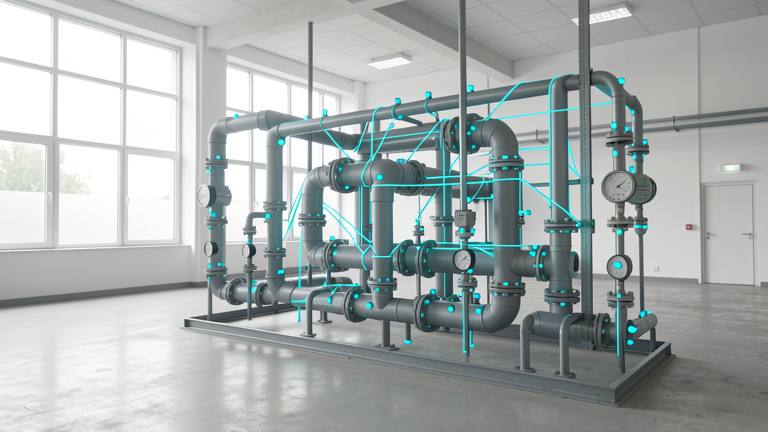
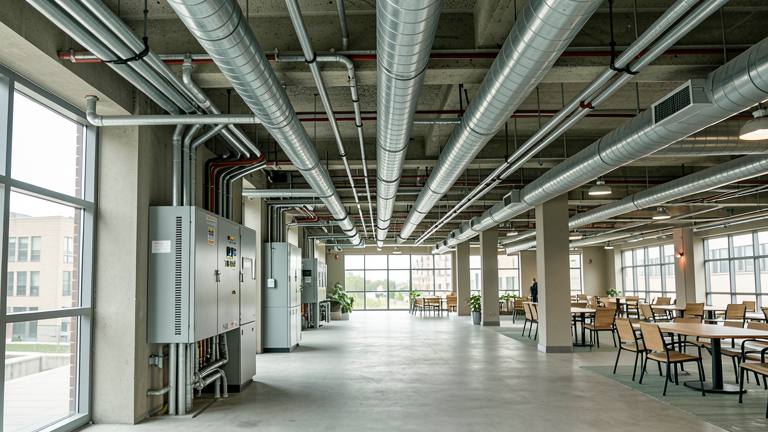
Monitored: continuously · the whole plant, section by section
The scenario: Every subsystem passes its own check. Only across the complete plant does it show where heat, water and power are working against each other instead of together.
Method proven on a live European reference aquatic center; presented anonymously.
Estimate from metered / design values. Zero-grid-import windows are real (metered).
Grounded in the applicable national standards for pool water treatment, plant energy performance and building energy performance. Same knowledge base as the European reference site; presented anonymously.
the pool operating guideline fixes the order for refurbishments: 1) reduce losses (envelope, pool cover, insulate the surge tank, ventilation heat recovery), 2) recover heat (heat recovery, waste-water heat, filter backwash as a heat-pump source), 3) generate efficiently (heat pump > CHP > gas). This hierarchy is decisive for public grant applications: funders check whether losses were reduced before the generation investment. Concretely: insulate the surge tank, add an outdoor-pool night cover and service the ventilation heat recovery before or together with the heat-pump installation.
Basis: the applicable national standard.10
Mandatory rules for a public family pool: the pool-water treatment standard (water treatment) — hygiene duty, annual sampling. the pool energy guideline (ventilation) — recommended, not enforced, but an insurance standard. the ventilation standard for indoor pools — ventilation hygiene duty, inspection every 2 years. the national buildings energy act 2024 — energy certificate on refurbishment, air-conditioning inspection every 4 years. Occupational safety — annual electrical test. An energy audit per the energy-audit standard is advisable for municipalities with more than 250 staff (not compulsory for a small operator).
Basis: Synthesis of the applicable national standards
The national buildings energy act the national buildings energy act 2024 treats pools as non-residential buildings. Mandatory air-conditioning inspection every 4 years (ventilation > 12 kW). On change of ownership or major refurbishment, tighter envelope U-values apply (external wall U ≤ 0.24 W/(m²·K)). A demand-based energy certificate is required above 250 m² of heated floor area. A hall pool with 1,800 m² of envelope at U=0.8 does not meet new-build standards — so grant funding for envelope refurbishment (up to 35 % rate) is available.
Basis: the national buildings energy act 2024 (the national buildings energy act)
The ISEK programme co-funds municipal climate-protection and refurbishment measures at 50 %, capped at 500,000 € per measure and 5 M€ per project. Precondition: the measure is anchored in the municipal climate-protection plan. Processing takes 6-12 months. Measures can be bundled (e.g. heat pump + insulation + load management in one application) but cannot be combined with federal BAFA funding on the same asset. Note: PV car-port roofing is usually funded separately at 30 %; ISEK eligibility for PV is a case-by-case decision requiring a climate-protection rationale.
Basis: ISEK (German regional urban-development grant)
The federal Module 2 funds heat pumps, thermal storage and heat-network connections in non-residential buildings at 40 %. Important: it is NOT combinable with the regional ISEK grant on the same measure. Municipalities must choose: ISEK 50 % (higher rate, longer processing) or the federal 40 % (faster, nationwide). ISEK is usually the better choice when the climate rationale holds; the federal grant is a fallback if ISEK is refused.
Basis: Federal efficient-energy grant, Module 2
Stromfee.US licenses the pool & wellness HVAC AI — proven in Europe, deployed on your existing plant. Single property, portfolio or chain.
Request software license →