Dryers & exhaust heat recovery
Laundry — washing, drying, ironing. Part of the glass family — like our glass BESS, biogas plant and CHP.
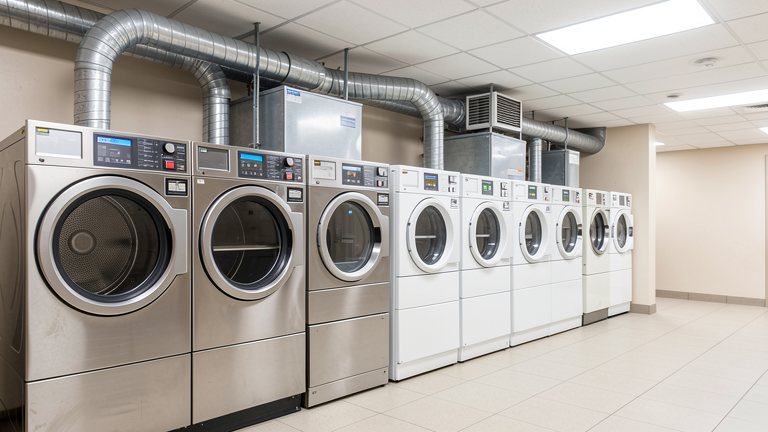
Washer → Dryer → Exhaust heat recovery → Hot water
Laundry — washing, drying, ironing. Part of the glass family — like our glass BESS, biogas plant and CHP.
The dryer is the laundry’s largest single electrical load. It evaporates water and blows the warm, humid air outside — along with the energy just put into it.
Two things decide consumption: the residual moisture a cycle ends at, and the lint filter. A clogged filter cuts airflow, the cycle runs longer and consumption rises — without any fault being reported.
Laundry — washing, drying, ironing.
Overview: The Glass Pool → · Markets: pool markets →
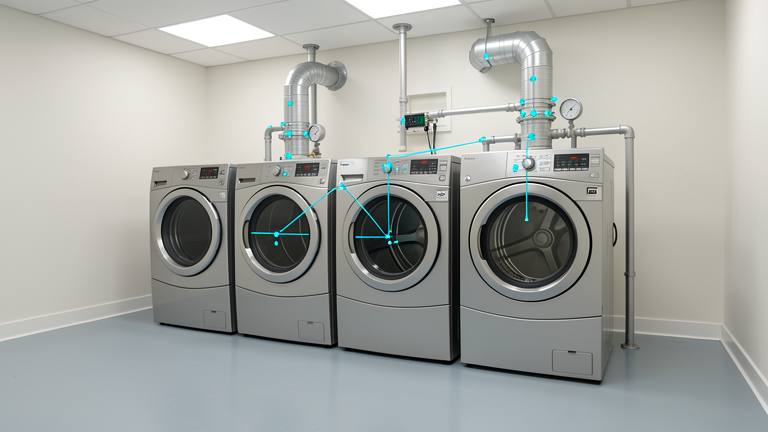
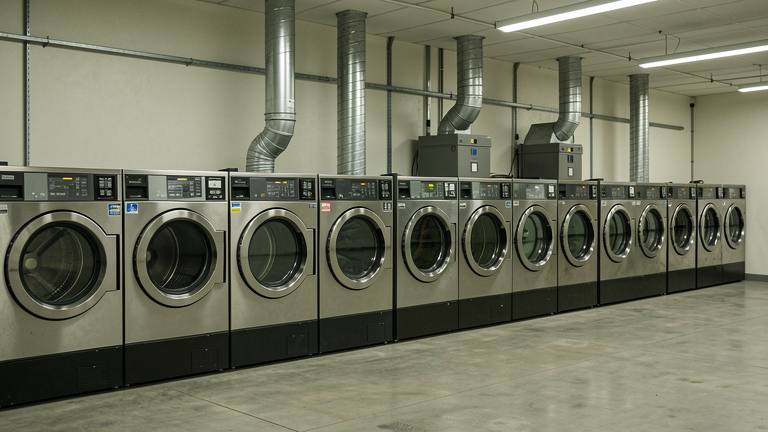
Monitored: continuously · exhaust temperature and recovery
The scenario: Dryers blow warm moist air straight out. The exhaust is a usable heat source, but as long as its temperature is never measured, the recovery unit is sized on a guess.
Method proven on a live European reference aquatic center; presented anonymously.
Estimate from metered / design values. Zero-grid-import windows are real (metered).
Grounded in the applicable national standards for pool water treatment, plant energy performance and building energy performance. Same knowledge base as the European reference site; presented anonymously.
Connected load is on the nameplate and never changes. Consumption changes through run time: the same cycle takes longer with a clogged filter, and therefore uses more energy.
Basis: plant engineering
The exhaust is warm and humid, so the potential is real. Whether it is harvested shows only in measurement: temperature before and after the exchanger plus the recovered energy.
Basis: plant engineering
In most properties yes, because the linen does not have to be finished to the minute. The order of the loads stays; only their position in the day changes.
Basis: plant engineering
Stromfee.US licenses the pool & wellness HVAC AI — proven in Europe, deployed on your existing plant. Single property, portfolio or chain.
Request software license →